The world of gaming and interactive media has evolved beyond imagination. What once began as simple 2D environments has become a universe of ultra-realistic worlds, dynamic physics, and immersive storytelling. At the core of this revolution lies one of the most powerful forces in modern development — the game engine.
Game engines have not only redefined how we create games but also how we experience digital worlds. From entertainment to education, film, and even industrial simulation, the technology driving game engines is shaping the future of interactivity itself.
From Pixels to Powerhouses: A Brief History of Game Engines
The first game engines of the 1990s, such as id Tech, Unreal, and RenderWare, were born out of necessity — tools designed to make development faster and more consistent. Early game developers had to rebuild graphics and physics systems for every title, slowing innovation.
The introduction of reusable engines changed that forever. Developers could now focus on creativity rather than code, building expansive worlds with shared frameworks for rendering, AI, audio, and networking.
Over time, engines evolved from simple 2D frameworks to multi-platform ecosystems capable of supporting 3D graphics, real-time lighting, procedural environments, and photorealistic rendering.
The Modern Game Engine: A Creative and Technical Powerhouse
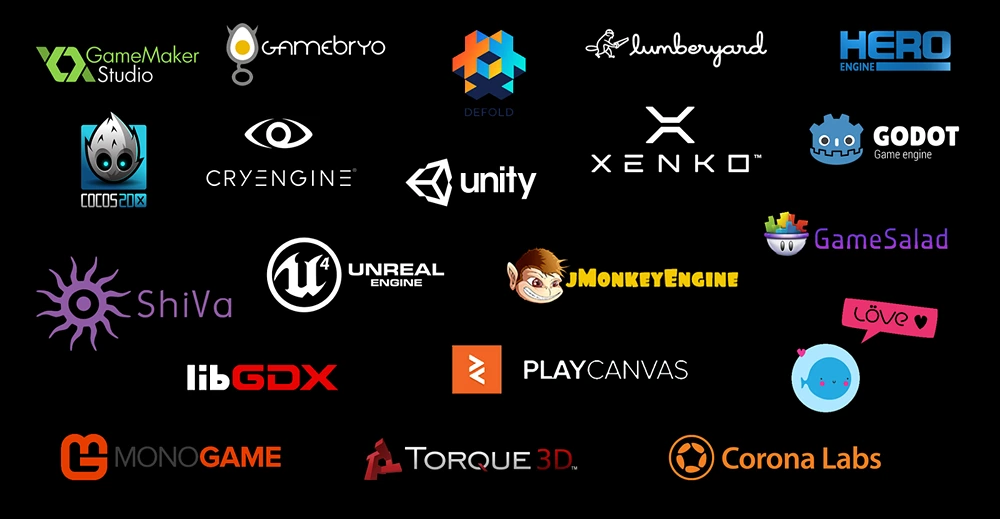
Today’s game engines — like Unreal Engine 5, Unity, and Godot — are no longer just tools. They are complete creative environments combining art, physics, AI, and design under one roof.
Key breakthroughs include:
- Real-Time Ray Tracing: Delivering cinematic lighting and shadows.
- Procedural Generation: Allowing developers to create vast, complex worlds with minimal manual input.
- Cross-Platform Deployment: One project can power games across PC, consoles, mobile, and VR simultaneously.
- AI-Driven Workflows: Automating animation, dialogue, and environmental behaviors.
- Hyper-Realistic Rendering: Achieving near-photographic fidelity with tools like Nanite and Lumen.
These advancements don’t just improve graphics — they empower storytelling, player immersion, and design freedom like never before.
Beyond Gaming: Interactive Media’s Expanding Frontier
Game engines have transcended entertainment. Today, industries as diverse as architecture, film, automotive, and education leverage them to simulate, visualize, and engage.
- Film Production: Real-time rendering is revolutionizing visual effects, as seen in The Mandalorian, where Unreal Engine powered entire virtual sets.
- Architecture & Design: Interactive walkthroughs replace static renders, giving clients immersive previews.
- Training & Simulation: Realistic, safe environments for pilots, surgeons, and engineers to hone their skills.
- Education & Storytelling: Interactive narratives engage learners in ways static materials never could.
In short, game engines have become the backbone of digital interactivity, transforming how we visualize and experience content.
The Next Era: AI, Metaverse, and Real-Time Everything
Looking ahead, the evolution of game engines aligns with three transformative forces: AI, the metaverse, and real-time simulation.
- AI-Generated Worlds: Procedural design and machine learning will allow environments, characters, and even dialogue to evolve dynamically.
- Persistent Virtual Spaces: Game engines will underpin interconnected metaverses — shared, persistent worlds for work, play, and creation.
- Photorealism Meets Accessibility: Cloud-based rendering will make advanced graphics available to anyone, anywhere, regardless of hardware.
We’re entering an era where game engines are not just tools, but creative ecosystems — empowering developers, artists, and storytellers to redefine what’s possible.
Why the Future Belongs to Adaptive Game Technology
The future of interactive media depends on adaptability.
As hardware, audience expectations, and technologies evolve, engines must remain flexible — scalable enough for AAA production, yet accessible to indie creators.
This balance between power and usability ensures that innovation remains democratized, fueling a diverse, ever-growing creative landscape.
The next generation of interactive media won’t just be built on game engines — it will be defined by them.